The Imprint of a Finger in Criminal Cases
Cerenity Blanding · William Allen High School, Pennsylvania, United States of America
July 9, 2026
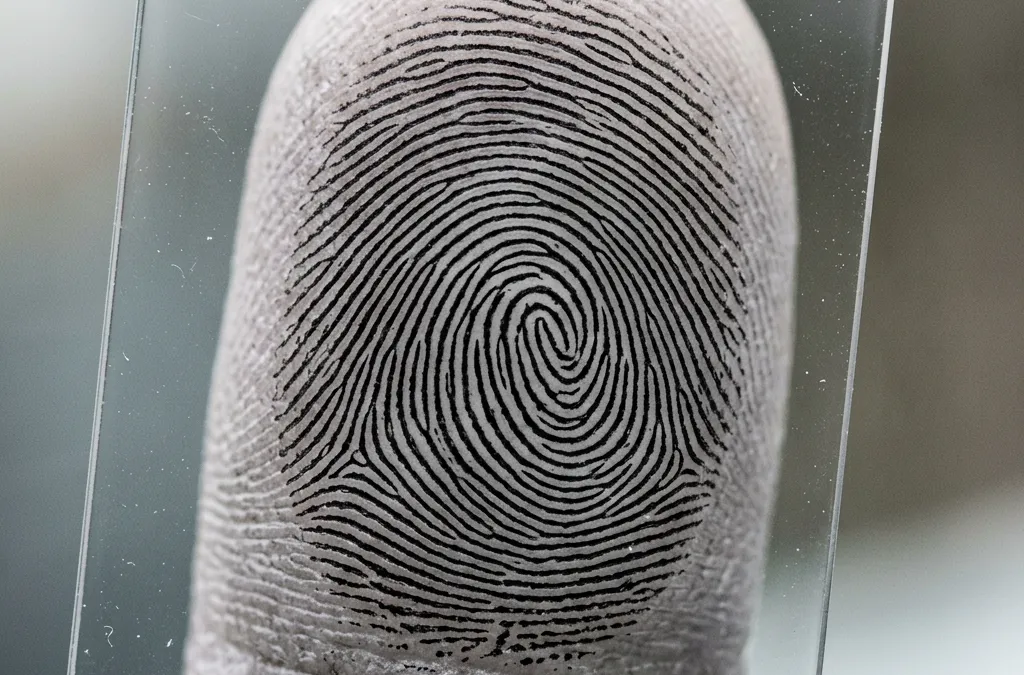
Have you ever wondered why police officers dust objects for fingerprints? They help investigators identify a suspect because every person’s fingerprint is unique. Even identical twins have different fingerprints because it is something that is only unique to one person. Therefore, fingerprints can connect a person to a certain object or place, making them valuable evidence during investigations and one of the most important used in forensic science.
Fingertips are covered with tiny raised lines called friction ridges. These ridges are what create the entire fingerprint. There are three basic patterns of these ridges: loop, whorl, and arch.
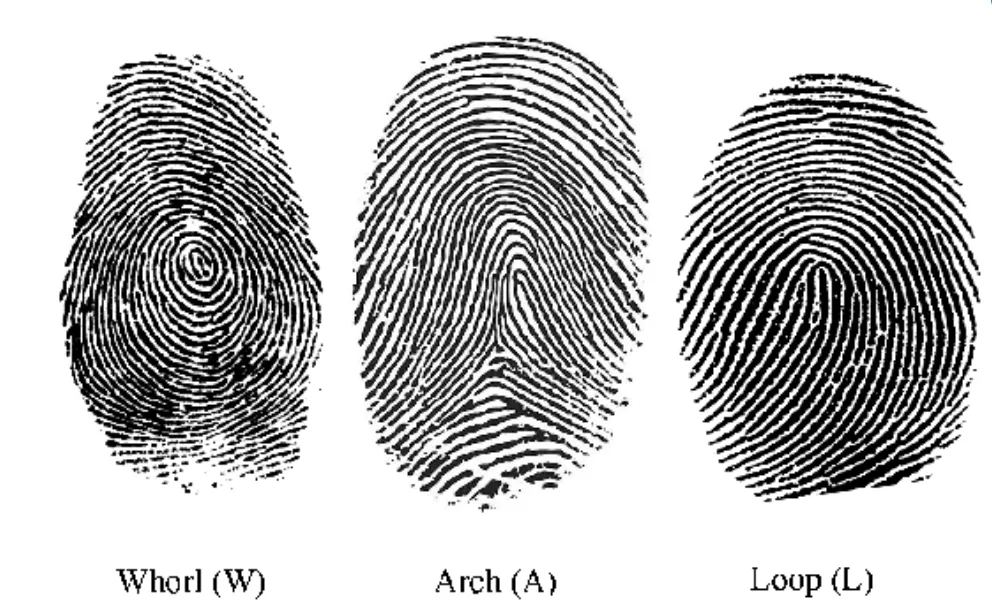
(2017) Association between gastrointestinal cancers and fingerprint patterns in the Iranian population. [Figure]. Genetics and Molecular Research. https://www.semanticscholar.org/paper/Association-between-gastrointestinal-cancers-and-in-Abbasi-Rasouli/2f7d3376bf46b5b5200af74c726da9766fc1f0e0 ¹
On the whorl, the ridges form circles and spirals. On the arch, the ridges enter from one side, create a small hill in the middle, and leave on the ohter side. On the loop, the ridges enter from one side, curve around, and leave on the same side.
Scientists have discovered that people develop these ridges before they are born, and it stays the same throughout their whole life unless the skin goes through an event that causes damage. Fingerprints are created by both genetic and environmental factors individuals experience inside the womb. Any pressure or movement shapes a fingerprint, which is why no two people have the same fingerprints. Therefore, experts can compare the tiny details that show up in the ridges, including endings, splits, a core, and other unique features.
Using this characteristic, researchers have analyzed fingerprint patterns for biomedical research, especially in genetics. With the advance of dermatoglyphics, the study of fingerprint patterns, and related technology, abnormal patterns in finger ridges have been linked to birth defects or even precancerous risks.²
Although some fingerprint marks cannot be seen with the naked eye, they are still present. People leave these marks everywhere – they are left on surfaces from the natural oils and sweat that our skin secretes. Because they lay hidden to an extent, these are called latent fingerprints. Crime scene investigators use special powders, chemicals, or tools to make these hidden prints visible.³
Fingerprinting has been used for more than 100 years because it is a reliable piece of science to identify a suspect. In 1999, the Federal Bureau of Investigation developed the IAFIS (the Integrated Automated Fingerprint Identification System) which helped speed up identification processes.⁴ Today, modern technology allows investigators to accurately compare fingerprints in an even shorter period of time. Specifically, computers can search through millions of fingerprints in the fingerprint database to find a match. Still, trained examiners carefully compare the prints, and use them alongside other evidence before reaching conclusions.
References
- Abbasi, S., & Rasouli, M. (2017). Association between gastrointestinal cancers and fingerprint patterns in the Iranian population. Genetics and Molecular Research, 16(3), https://www.semanticscholar.org/paper/Association-between-gastrointestinal-cancers-and-in-Abbasi-Rasouli/2f7d3376bf46b5b5200af74c726da9766fc1f0e0
- Ghosh, R., Chaudhuri, K., Boral, D., Giri, D., Chattopadhyay, S., Nair, K. K., & Arora, R. (2025). Fingerprint pattern analysis for the early detection of oral potentially malignant disorders: A cross-sectional study. Cureus, 17(8), e91267. https://doi.org/10.7759/cureus.91267
- National Institute of Justice. (2013, March 27). Fingerprints: An overview. U.S. Department of Justice, Office of Justice Programs. https://nij.ojp.gov/topics/articles/fingerprints-overview
- Federal Bureau of Investigation. (n.d.). “How to Take Fingerprints” instruction book. FBI History. https://www.fbi.gov/history/artifacts/how-to-take-fingerprints-instruction-book
- National Institute of Justice. (2011). Fingerprint sourcebook. U.S. Department of Justice, Office of Justice Programs. https://nij.ojp.gov/library/publications/fingerprint-sourcebook