Rural-Urban Health Disparities
Rachel Lee · Walton High School
August 5, 2026
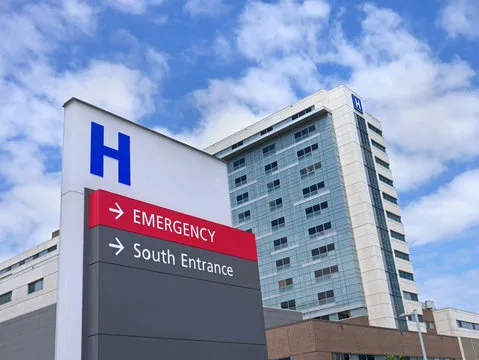
Using 2021 data and records from the CDC, researchers at the Center for Health Policy at Columbia University School of Nursing found that in the course of COVID-19, rural communities experienced excessively high case rates compared to suburban or urban communities.¹ The vulnerability of rural residents to the pandemic was tied to weaknesses in rural healthcare systems, such as shortages of hospital beds, healthcare workers, and other infrastructure.
Rural-urban health disparities is a term that refers to the differences in health quality and accessibility between countries and cities, with rural patients often experiencing more difficulties in receiving appropriate care. Although this problem has long-existed, COVID-19 intensified these differences, highlighting how disconnection from the systems meant to keep people healthy can result in serious consequences. Following the pandemic, this issue has been brought into sharper public focus and discussion.
Ultimately, the significance of this issue comes down to preventability. Limited access to care means rural patients are more likely to miss the critical “golden hour” (the crucial first 60 minutes following a severe injury or condition) in emergencies.² They are also less likely to receive early screening for chronic conditions including heart disease and cancer due to the lack of regular check-ups.³ As preventable conditions progress into severe illnesses requiring hospitalization, rural patients may have to go through more expensive and complex procedures.
To understand why the rural-urban health disparity exists, we need to take a look into the root cause: the structural design of the healthcare system. Researchers such as Dr. Probst at the Department of Health Services Policy and Management in the University of South Carolina have pointed to “structural urbanism” – a bias toward large population centers, such as cities, in how healthcare is organized and funded. He explains that in the current system, this “bias” stems from three main factors:
- Healthcare is treated as a market commodity (a product) rather than public infrastructure (such as roads and schools). So, healthcare industries require a large amount of paying patients to remain working. From the perspective of hospitals, cities are where that large amount of a paying population is.
- Public health funding is frequently distributed based on population size, which again, favors urban areas.
- Healthcare facilities in rural areas face inefficiencies due to distance in obtaining necessary infrastructure and medical devices. Because of this barrier, equal funding does not translate into equal quality and access.⁴
This structural issue gives rise to two categories of barriers: provider-side (the side providing the healthcare services such as hospitals) and patient-side.
Provider-Side Barriers
-
Severe Workforce Shortage
Healthcare workers are distributed unequally across the country. According to data from the Bureau of Health Professionals in Health Resources and Services Administration, only 9% of physicians practice in rural areas when 20% of the U.S. population are rural residents. This imbalance is particularly concerning because rural communities often have a large elderly population with greater healthcare needs and health risks.⁵
-
Lack of Specialized Departments and Services
Studies suggest that specialty (fields of work) is the biggest factor that affects where doctors decide to locate. Highly specialized doctors, such as surgeons, are less likely to practice in a rural area. As a result, patients requiring specialized care often have to travel long distances. Further, the previously mentioned limitations in funding and staffing also cause many rural hospitals to cut the highly specialized departments and services.
-
Fragmented Care
As rural patients navigate through multiple healthcare facilities, whether that be between different rural hospitals, or a rural and urban hospital, coordinating care becomes difficult. For example, because hospitals do not use the same electronic medical record systems, miscommunication can occur in the process. Ultimately, this results in unclear care plans, longer hospital stays, and therefore higher costs.⁶
Patient-Side Barriers
-
Transportation
Transportation is a significant challenge on the patient-side, especially for older adults who make up a large part of the rural population. The distance to urban facilities combined with the difficulties the elderly experience in driving or accessing public transportation makes this a complex issue. In a 2017 policy brief by the University of Minnesota’s Rural Health Research Center, survey participants discussed how existing transportation programs, vehicles, and drivers are only concentrated in urban areas. This left people in rural areas to rely heavily on emergency departments and ambulance services for even non-emergency cases, increasing both risk and cost of accessing care.⁷
-
Medical Mistrust
Rural communities have also shown to be less receptive to healthcare services. With analyses on results from the 2008 Health Information Trend Survey, researchers at the Department of Public Health Sciences at Pennsylvania State University found rural residence was correlated with healthcare avoidance to a statistically significant degree, with rural residents being “1.7 times more likely to report avoidance in comparison to respondents residing in a metropolitan area”. ⁸ Specifically, there is stigma that surrounds healthcare and treatment, especially regarding public health interventions and services. Such mistrust was exemplified with a large amount of vaccine hesitancy cases in rural communities during the COVID-19 pandemic. According to researchers at the State University of New Jersey and the Yale School of Medicine, one possible reason behind the issue is that rural residents are aware that the healthcare system is designed for wealthy urban communities, tying back to the roots of structural urbanism.⁹
Because the causes are complex, addressing the rural-urban health disparity requires change in many parts.
-
Addressing the Root of Structural Urbanism through Funding Reform
A widely discussed funding reform is adopting the Pennsylvania Rural Health Model (PARHM).¹⁰ Currently adopted in Pennsylvania, the system uses a global budget, where hospitals receive a fixed amount of funding rather than being funded based on patient volume. This results in greater financial stability especially for rural hospitals. Yet, studies have demonstrated mixed results and positive effects without statistical significance. Further, as large-scale reforms on a national level require a large amount of time and resources, more immediate and flexible solutions are necessary.
-
Telehealth and Mobile Clinics
One such solution is expanding telehealth and mobile clinics. These are ways to do remote care, meaning the doctor and patient do not have to be in the same room. Whether it is through live video calls, remote patient monitoring through devices, or digital reminders for medications and health risks, telehealth allows patients to connect with doctors from their homes, which increases convenience and eliminates travel time and the barrier of transportation. Past studies have reported that rural patients generally report high satisfaction, acceptability, and ease of usage with telehealth services.¹¹ Of course, telehealth cannot replace in-person care for all conditions. Further, it faces challenges with limited internet access in some rural areas, as well as low levels of digital literacy among the elderly. Despite these limitations, remote care remains a highly adjustable and accessible short-term solution that can be implemented quickly since all it requires is program installation and usage education.
-
Strengthening the Rural Healthcare Workforce
A long-term goal should be to strengthen the workforce so that more sustainable in-person care becomes an option. Programs such as rural training pipelines for resident doctors, medical school loan repayment incentives, and visa waivers for international physicians are ways to attract providers to underserved rural areas. While these programs already exist, a study by Dr. Arredondo suggests that current programs are not effective on retention – that is, while they attract doctors to rural areas, they fall short in keeping them there.¹² Therefore, as Arredondo notes, steps can be taken to develop programs that encourage the relocated doctors to stay long-term.¹³
-
Combating Medical Mistrust through Effective Communication Strategies
Adopting effective communication strategies is essential to build trust in rural communities. First, health information must be made more accessible through the use of plain language. Research has identified that only 7% of public health materials are written at an easy-to-understand level.¹⁴ It is crucial that ways for people to comprehend the significance of healthcare are developed so that they become willing to seek services. One effective solution is to partner with trusted messengers of the rural community, whether that be a religious figure or a political/community leader. During the COVID-19 pandemic, initiatives that partnered with trusted community members to deliver health information were shown to improve engagement and outcomes, as seen in a case study on the Finger Lakes Rural Immunization Incentive by researchers at the University of Rochester.¹⁵
Ultimately, all these efforts must be made alongside one another since the rural-urban healthcare disparity is an issue that is driven by multiple factors. Most immediately, telehealth could be implemented while longer-term efforts to grow the rural healthcare workforce and decrease rural stigma of health services take place. We must address both the provider-side and patient-side barriers from structural urbanism. Only then will we be able to move toward a healthcare system that ensures equity for all.
References
- Kang, J. A., Quigley, D. D., Chastain, A. M., Ma, H. S., Shang, J., & Stone, P. W. (2025). Urban and rural disparities in COVID-19 outcomes in the United States: A systematic review. Medical Care Research and Review : MCRR, 82(2), 119–136. https://doi.org/10.1177/10775587241298566
- Miller, K. E. M., James, H. J., Holmes, G. M., & Van Houtven, C. H. (2020). The effect of rural hospital closures on emergency medical service response and transport times. Health Services Research, 55(2), 288–300. https://doi.org/10.1111/1475-6773.13254
- Fairfield, K. M., Murray, K., Cloutier, L. M., Daggett, J. L., Felix, B. R., Kapala, C. A., Fay-Leblanc, R. M., Nadeau, A. E., Rauscher, B. K., Rensenbrink, K., Rothenberg, D. A., & Stein, K. D. (2025). Stage at diagnosis for common cancers according to rurality, area deprivation, and insurance, 2017 to 2021. Cancer Prevention Research, 18(8), 465–474. https://doi.org/10.1158/1940-6207.CAPR-24-0587
- Probst, J. C., Eberth, J. M., & Crouch, E. (2019). Structural urbanism contributes to poorer health outcomes for rural America. Health Affairs, 38(12), 1976–1984. https://doi.org/10.1377/hlthaff.2019.00914
- Rosenblatt, R. A., & Hart, L. G. (2000). Physicians and rural America. The Western Journal of Medicine, 173(5), 348–351. https://doi.org/10.1136/ewjm.173.5.348
- Coombs, N. C., Campbell, D. G., & Caringi, J. (2022). A qualitative study of rural healthcare providers’ views of social, cultural, and programmatic barriers to healthcare access. BMC Health Services Research, 22(1), 438. https://doi.org/10.1186/s12913-022-07829-2
- Henning-Smith, C., Evenson, A., Corbett, A., Kozhimannil, K., & Moscovice, I. (2017, November). Rural transportation: Challenges and opportunities [Policy brief]. University of Minnesota Rural Health Research Center. https://rhrc.umn.edu/wp-content/uploads/2025/06/Rural-transportation-challenges-and-opps_revised-2025.pdf
- Spleen, A. M., Lengerich, E. J., Camacho, F. T., & Vanderpool, R. C. (2014). Health care avoidance among rural populations: Results from a nationally representative survey. The Journal of Rural Health, 30(1), 79–88. https://doi.org/10.1111/jrh.12032
- Lister, J. J., & Joudrey, P. J. (2023). Rural mistrust of public health interventions in the United States: A call for taking the long view to improve adoption. The Journal of Rural Health, 39(1), 18–20. https://doi.org/10.1111/jrh.12684
- Chatterjee, P., Wang, M., Chen, X., Kim, S., Coe, N. B., Joynt Maddox, K. E., Murphy, K., & Werner, R. M. (2025). Mixed evidence that rural hospitals’ finances improved with participation in the Pennsylvania Rural Health Model. Health affairs (Project Hope), 44(7), 788–795. https://doi.org/10.1377/hlthaff.2024.01559
- Butzner, M., & Cuffee, Y. (2021). Telehealth interventions and outcomes across rural communities in the United States: Narrative Review. Journal of medical Internet research, 23(8), e29575. https://doi.org/10.2196/29575
- Arredondo, K., Bay, K., Witte, L., Touchett, H., Sonnenfeld, M., Paterson-Roberts, A., Vincenti, M., & Watts, B. V. (2026). Rural practice made attractive: A scoping review of rural primary care physician recruitment and retention incentives. Journal of General Internal Medicine. https://doi.org/10.1007/s11606-026-10218-8
- Arredondo, K., Touchett, H. N., Khan, S., Vincenti, M., & Watts, B. V. (2023). Current programs and incentives to overcome rural physician shortages in the United States: A narrative review. Journal of General Internal Medicine, 38(3), 916–922. https://doi.org/10.1007/s11606-023-08122-6
- Caballero, A., Leath, K. J., & Staton, A. D. (2023). Strategic combination of theory, plain language, and trusted messengers contribute to COVID-19 vaccine uptake: Lessons learned from development and dissemination of a community toolkit. Vaccines, 11(6), 1064. https://doi.org/10.3390/vaccines11061064
- Reichelt, M., Cullen, J. P., Mayer-Fried, S., Russell, H. A., Bennett, N. M., & Yousefi-Nooraie, R. (2023). Addressing COVID-19 vaccine hesitancy in rural communities: A case study in engaging trusted messengers to pivot and plan. Frontiers in Public Health, 11, 1059067. https://doi.org/10.3389/fpubh.2023.1059067