Computing with Neurons
Yuval Kaplan and Vinsi Tadi · Walton High School
October 6, 2026
Introduction
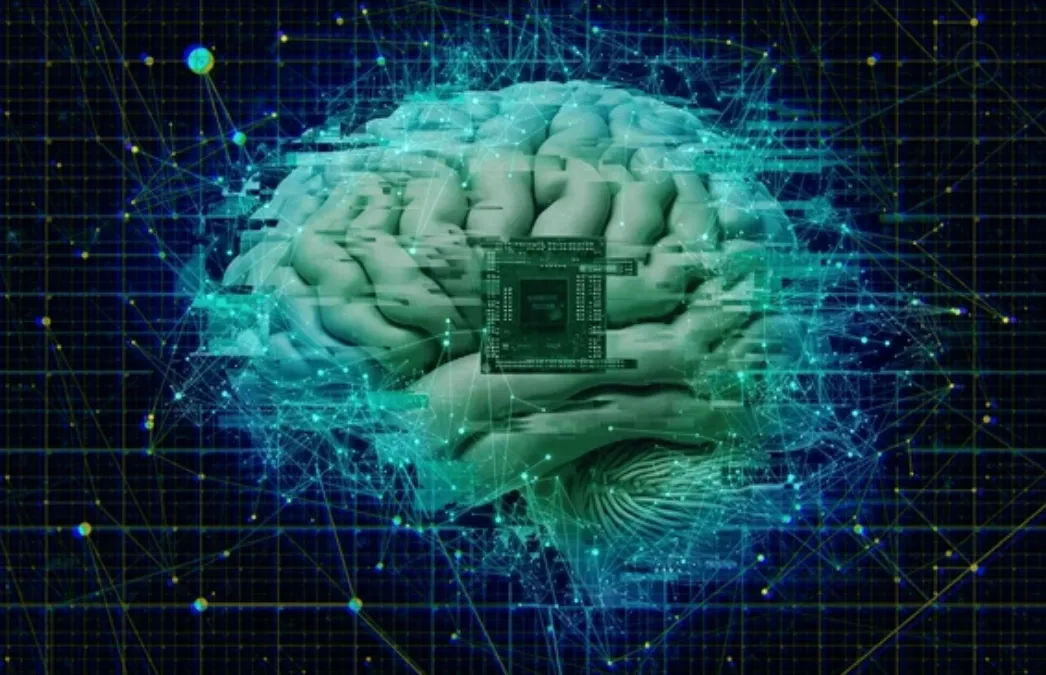
As the world’s need for computational power increases, many industries, including AI, are rapidly expanding. Yet, the continuously growing AI usage poses an alarming risk of energy overuse. To this, new projects have proposed possible solutions. The relatively new field of biocomputing has shown promise in lowering future energy consumption, even though it may introduce a unique risk.
Biocomputing & iPSCs
Biocomputing is a type of technology that uses biological materials like cells or DNA to store or process information. One relatively new form of biocomputing combines human brain cells with an electrode to create a computer that responds to electrical and chemical stimuli.¹ Recently, this technology has been heavily researched and has become commercially available through Cortical Labs, which is one of the first companies to start experimenting with biocomputers. The computer that Cortical Labs developed works by training iPSCs (induced pluripotent stem cells) to perform tasks by using different signal stimuli to “reward” or “punish” the cells.
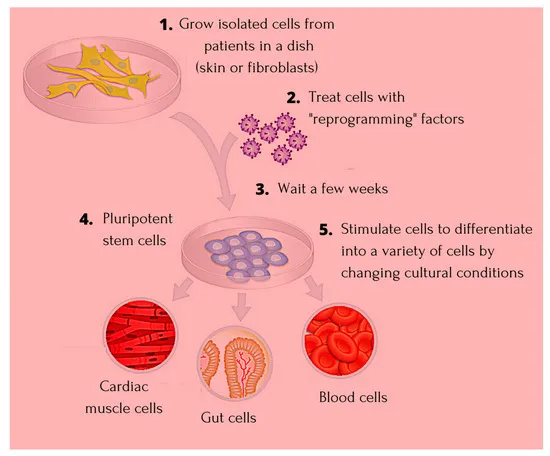
Figure 1. Process of iPSC formation and maturation Note. Reprinted from “Induced Pluripotent Stem Cells (iPSCs)—Roles in Regenerative Therapies, Disease Modelling and Drug Screening” by Soud et al., 2021, Cells, 10(9), (https://www.mdpi.com/2073-4409/10/9/2319)²
The iPSCs used are derived from somatic (body) cells using a group of proteins known as the Yamanaka factors.³ The cells are then artificially reprogrammed to reset genetic memory. As a result, they are able to act like stem cells that can transfer or mature into almost any cell type.
Some tasks that have been completed through iPSC technology include:
- Playing Pong through in vitro neurons ⁴
- Assessing how certain drugs affect neural systems’ information processing ⁵
- Running the 1993 video game DOOM
In the first and third examples, the cells in the biocomputer were trained to complete a task. This is done by “rewarding” the cells for correct inputs, which eventually creates a system primed to do an action, such as play video games. Although using biocomputers to play video games is not directly beneficial to human development, the example demonstrates the potential of biocomputers in many fields, as well as their current capabilities. Besides playing video games, a major use case of biocomputers is identifying the effects of certain drugs on neural systems, since biocomputers provide a great model of neural function while reducing the need for human participants.
The Scientific Mechanism
The free energy principle, written by Karl Friston, states that “any self-organizing system that is at equilibrium with its environment must minimize its free energy”⁶ The free energy principle is similar to the second law of thermodynamics, which states that a system naturally tends towards disorder (higher entropy). However, living biological systems must spend energy to increase their order and survive. For a living system, the ultimate state of disorder is death. Most cellular processes delay this; for example, neurons in the brain combat states of disorder and work to stay alive by remaining in an ordered state.
In Cortical Labs, the power of neurons is harnessed through this very principle. Biocomputers that contain neurons work by training neurons and utilizing their attempts to regulate the disorder imposed on them. Disruptive electrical signals are sent through a group of neurons, and when a neuron performs the correct action, the disruptive signals are removed. Instead, a predictable stimulus that acts as the “reward” is sent. But, when neurons fail to complete a task, the unpredictable “punishment” signals continue. In this way, neurons can be trained or conditioned to favor completing certain actions.
The Moral Debate
However, this raises an important question:
Is this training immoral?
The moral debate introduces notable concerns. As of now, there is no way to determine whether the neurons in a biocomputer are conscious or are capable of “feeling” the same way a mature human brain can. The scientific community is still largely uncertain about what constitutes consciousness, so whether biocomputers contain consciousness is still up for debate.
Conclusion
CL1 is the commercially available biocomputer model made by Cortical Labs. It follows code by utilizing biOS (Biological Intelligence Operating System), which allows for communication with biological tissue.⁷ The availability of this technology to labs worldwide has begun new research in many fields like drug development. However, since the technology is so new (only made available in 2025!), labs have yet to publish substantial research using the biocomputer (as of now; Oct 6 2026).
+) If you want to check out some research using CL1, check out research from the University of Milan⁸ and the National University of Singapore’s Yong Loo Lin School of Medicine⁹!
Overall, the technology holds significant potential for research on communication pathways, drug interactions with brain cells, disease modeling, and much more. However, these benefits may not outweigh the moral issues that arise from using this technology. If the iPSCs in these machines are truly conscious, then it would be immoral to subject them to the training of a biocomputer; but if they lack consciousness, then is it no longer immoral to hybridize brain cells with a machine? Or, is it morally acceptable to modify or destroy living neural tissue for scientific research? And, come a time when the technology becomes more capable, will there be ethical limits on what the neural networks can be made to do? There may not be an answer to these questions until far into the future, but it is worth considering the ethical implications of biological computing starting now.
References
-
Spichak, S. (2026). Biocomputing: Beyond the hype. Journal of Medical Internet Research, 28. DOI: 10.2196/100949
-
Aboul-Soud, M. A. M., Alzahrani, A. J., & Mahmoud, A. (2021). Induced pluripotent stem cells (iPSCs)—Roles in regenerative therapies, disease modeling and drug screening. Cells, 10(9), 2319. https://doi.org/10.3390/cells10092319
-
Conger, K. (2018, July 16). Researchers identify protein essential for making stem cells. News Center. med.stanford.edu/news/all-news/2018/07/researchers-identify-protein-essential-for-making-stem-cells.html
-
Kagan, B. J., Kitchen, A. C., Tran, N. T., Habibollahi, F., Khajehnejad, M., Parker, B. J., Bhat, A., Rollo, B., Razi, A., & Friston, K. J. (2022). In vitro neurons learn and exhibit sentience when embodied in a simulated game-world. Neuron, 110(23). DOI: 10.1016/j.neuron.2022.09.001
-
Watmuff, B., Habibollahi, F., Desouza, C., Khajehnejad, M., Loeffler, A., Baranes, K., Poulin, N., Kotter, M., & Kagan, B. J. (2025). Drug treatment alters performance in a neural microphysiological system of information processing. Communications Biology, 8(1). DOI: doi.org/10.1038/s42003-025-08194-6
-
Friston, K. (2010). The free-energy principle: A unified brain theory? Nature Reviews Neuroscience, 11(2), 127–138. DOI: doi.org/10.1038/nrn2787
-
P/L, C. L. (n.d.). Cortical Labs - CL1. Cortical. corticallabs.com/cl1
-
Reply, T. (2026, January 28). Reply and the University of Milan Launch Experimental Research on Biological Computing based on Cortical Labs’ CL1 platform. reply.com/en/newsroom/news/reply-and-the-university-of-milan-launch-experimental-research-on-biological-computing-based-on-cortical-labs-cl1-platform
-
NUS Medicine, DayOne and Cortical Labs Unveil Biological Data Center Prototype in Singapore. Medicine.nus.edu.sg. (2026, August 17). medicine.nus.edu.sg/news/nus-medicine-dayone-and-cortical-labs-unveil-biological-data-center-prototype-in-singapore/