Hudson Muse, Walton High School (Marietta, GA)
Drug Use in Minors
Over the past couple of years, drug use has increased among youth, and there are several things that have caused this to occur. The one that has had the most impact is the development and increased popularity of vaping and e-cigarettes, which were advertised to have flavors similar to candy and are widely available. The main danger caused by the increased popularity of vaping was that some companies started to use cheaper products to make the vapes, including nicotine, a drug substance that is smoked, to keep up with the high demand and make more profit. This has had a significant impact on the youth population and can be compared to an epidemic.
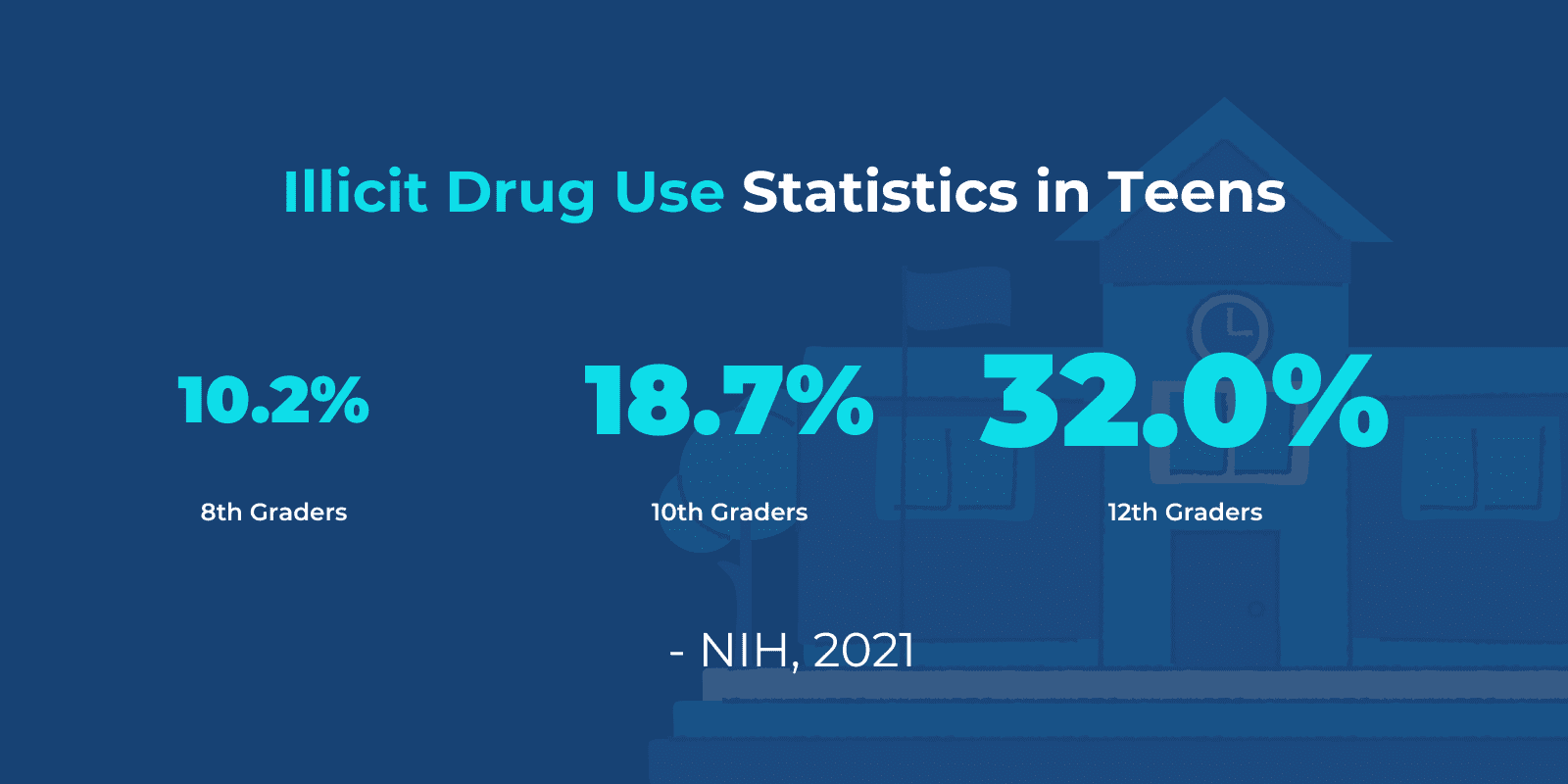
Before the COVID-19 pandemic, NIDA (The National Institute on Drug Abuse) conducted a report on the percentage of students using drugs in a grade, finding that “the percentage of adolescents reporting they used any illicit substances in 2023 continued to hold steady below the pre-pandemic levels reported in 2020, with 10.9% of eighth graders, 19.8% of 10th graders, and 31.2% of 12th graders” (NIH NIDA, 2023)¹ Early on, children learn that their brain develops until the age of 20, and the use of drugs during this time proves to stunt body growth and development.
How Drug Use Affects Family and Those Around You
While using drugs obviously affects a teen’s development and body, it also affects their relationship with friends and family; “the studies of families with SUDs (Substance Use Disorders) reveal patterns that significantly influence child development and the likelihood that a child will struggle with emotional, behavioral, or substance use problems” (Lander et al., 2013)². While some children may not grow up to become addicts despite being surrounded by drugs throughout their childhood, it is important to note that whether or not the people around is involved in drug use can cause a “domino-like” effect – one is more prevalent to becoming addicted themselves if it is normalized through the people in their lives, and the cycle continues.
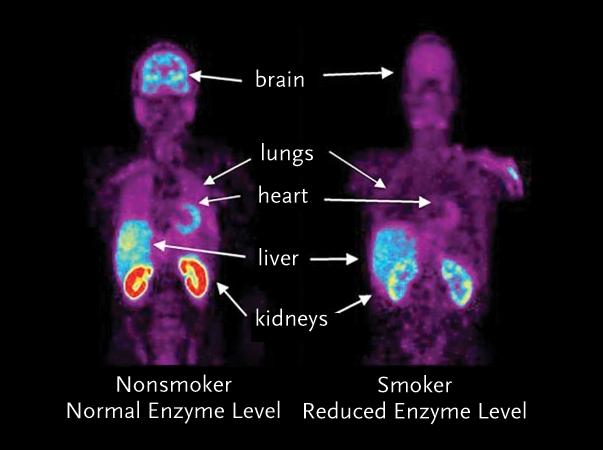
“In these composite PET images of smokers and nonsmokers, arrows demonstrate lower concentrations of the enzyme monoamine oxidase in many of the smokers’ organs (Fowler et al., 2003b)”
The Stunting of Growth and Development
The use of substances such as marijuana, cocaine, meth and other stimulants interfere with the development of the brain. The brain continues to develop into a person’s mid-20s, but drug use before the finished development of your brain can impair cognitive development, which includes learning, memory, decision making, and emotional regulation. The brain’s ability to form new synaptic connections is called neuroplasticity, and substance abuse during this time can permanently impair the brain’s neuroplasticity. One of the things these networks of fibers in the brain (specifically nerve fibers) make is white matter. Research was conducted to determine how drugs affect the brain’s white matter volume, and it was found that “marijuana use interacted with white matter volume to predict depression scores on the Beck Depression Inventory (BDI)” (Squeglia et al., 2010)⁵. The Beck Depression Inventory can be used to determine if you are depressed and the severity of said depression. The finding was that marijuana use indirectly affected both white matter volume by decreasing it and scores on the BDI, with marijuana users exhibiting more depressive symptoms.
Personal Experience
I have grown up around drug use in my family and around my friends, and I can also confirm that these patterns shown by drug users line up with the discoveries and reports made by research. This has become a serious issue, and especially an evident one among teenagers. People who do drugs are digging a hole they may not be able to get out of. I have seen this firsthand with my relatives. Take the advice from a person who has seen drug use almost destroy a relative’s life several times.
References:
- U.S. Department of Health and Human Services. (2024, March 27). Reported drug use among adolescents continued to hold below pre-pandemic levels in 2023. National Institutes of Health. https://nida.nih.gov/news-events/news-releases/2023/12/reported-drug-use-among-adolescents-continued-to-hold-below-pre-pandemic-levels-in-2023#:~:text=The%20percentage%20of%20adolescents%20reporting,to%20the%20latest%20results%20from
- Lander, L., Howsare, J., & Byrne, M. (2013). The impact of Substance Use Disorders on families and children: From theory to practice. Social work in public health. https://pmc.ncbi.nlm.nih.gov/articles/PMC3725219/
- Teen drug use: Signs & statistics. Sandstone Care. (2022, May). https://www.sandstonecare.com/blog/11-teen-drug-use-facts/
- Fowler, J. S., Volkow, N. D., Kassed, C. A., & Chang, L. (2007, April). Imaging the addicted human brain. Science & practice perspectives. https://pmc.ncbi.nlm.nih.gov/articles/PMC2851068/
- Fowler, J. S., Volkow, N. D., Kassed, C. A., & Chang, L. (2007, April). Imaging the addicted human brain. Science & practice perspectives. https://pmc.ncbi.nlm.nih.gov/articles/PMC2851068/
 Meducated